Friday, October 25, 2013

Free Guinabo Arnis Clinic On by James U. Sy Jr.

Grandmaster Felix Guinabo (6th from left, standing, with cap), his assistants, and participants of the Guinabo Arnis and Combat Sports (GACS) Free Arnis Clinic recently at the Manville Royale Grounds, Araneta Avenue, Pahanocoy, Bacolod City (James U. Sy Jr./CMAS Photo). Cyril Indonila (left) and Vincent Espanola performing Trece Grabes Piga-Piga Arnis System recently as part of the Guinabo Arnis and Combat Sports (GACS) Free Arnis Clinic at the Manville Royale Grounds, Araneta Avenue, Pahanocoy, Bacolod City (James U. Sy Jr./CMAS Photo). A total of 32 teenagers enrolled in the ongoing Guinabo Arnis and Combat Sports (GACS) Free Arnis Clinic conducted by Founder/Grandmaster Felix A. Guinabo at the Manville Royale Grounds, Araneta Avenue, Pahanocoy, Bacolod City. GM Guinabo, a Board Director of the Negros Occidental Baston Federation (NOBF), Inc., offered the free clinic to increase awareness among the younger generation about the indigenous martial art and culture of the province of Negros Occidental. GM Guinabo teacher his own system, Trece Grabes Piga=Piga System, which he developed after studying under five different Arnis grandmasters. The clinic will run for 2 months with a total of 32 hours, broken down as 16 sessions, each one lasting 2 hours. Such time frame is sufficient to develop a good foundation for Arnis. The enrollees were very grateful for the opportunity because most of them are from poverty-stricken families. A pakyaw package for such a course may run from P3,000-8,000, depending on the particular instructor. GM Guinabo came up with this idea because the government has no established programs to make Arnis as part of the standard education of Filipinos. There is already a law declaring Arnis as the National Sport and Martial Art of the republic and directives to the DepEd to make it part of the school system. However, the focus has been on the sportive aspect, and largely sacrificing the cultural and martial aspects. The cultural aspect being taught in schools nowadays are primarily borrowed and synthesized from Japanese Karate, Chinese Wushu, and other Asian martial arts. It is the wish of GM Guinabo to preserve the traditional fighting arts of our forefathers.

Thursday, October 17, 2013

USLS PE Students Interview Conceptual Arnis Founder

Negros martial arts researcher/historian/writer James U. Sy Jr. (center), Founder/Master of the Conceptual Arnis System, with University of St. La Salle (USLS) freshmen students (from left) Kristian Virgil Mae Paralisan, Elaine castñeda, Khatrinna Cantero, Cedric francis Claur, and Jason Bacud after an interview for the group's PE class presentation recently at the Provincial Capitol Lagoon, Lacson St., Bacolod City (Kristian Paralisan photo). Five students from the University of St. La Salle (USLS) led by Kristian Virgil Mae Paralisan interviewed Negros martial arts researcher, historian, and writer James U. Sy Jr., Founder/Master of the Conceptual Martial Arts Society (CMAS), Inc., recently at the Provincial Capitol Lagoon, Lacson St., Bacolod City as part of the requirements for their Physical Education (PE) class. Paralisan, who hails from Cebu and had previously trained in Shinshintoitsu Aikido, contacted Sy through her father, Virgilio Paralisan. The 1st year PE class was tackling individual sports and Paralisan's group was tasked to do a research on the martial arts, make an actual presentation to the class,and to submit a written report on the subject. The USLS students did a video interview about Sy's own synthesis of the martial arts, the Conceptual Arnis System, which is a composite of a number of Negros Arnis systems, Aikido, and other arts. Sy then went on to show them a number of very simple self defense sequences that they can perform in front of the class. Among those shown were defenses against wrist grabs, knife pointing, and striking attacks. By special request, Sy also showed them the pure forms of different martial arts such as Muay Thai, Aikido, and the traditional Arnis styles of Negros. Sy also lectured on the history of the indigenous fighting arts of the province and the benefits of martial arts training. Sy, also a product of USLS, is a certified Master in the Filipino Martial Arts (FMA) by at least 12 grandmasters, among them GM Benefredo M. Lobrido (Original Filipino Tapado), GM Wilson E. Viñas and GM Dominador D. Ferrer (Lapu-Lapu Viñas Arnis), and GM Estanislao T. Guarra (Guarra Style Modern Arnis). Sy holds Black Belts and/or Instructor grade in Aikido, Kimdo Taekwondo, Karate, and Pencak Silat among others. As western Visayas Correspondence, he has written a number of scholarly pieces for the Rapid Journal and hundreds of martial arts related items for the Negros Daily Bulletin and other local newspapers.

Friday, October 11, 2013

Aikido Seminar Conducted for UNO-R Crim Students by: James U. Sy Jr.

Guest Instructor James U. Sy Jr. (seated), Founder of the Conceptual Martial Arts Society (CMAS), Inc., 1st Dan Aikido, together with criminology students of the UNO-R Martial Arts Club (UNO-R MAC) under Defensive Tactics (DefTac) Instructor Master Ferdinand Emmanuel "Bobot" Y. Gayoles after the Introduction to Aikido Seminar last August 14, 2013 at the UNO-R Gym, University of Negros Occidental-Recoletos (UNO-R), Lizares St., Bacolod City (James U. Sy Jr./CMAS photo). The Introduction to Aikido Seminar was conducted by Guest Instructor James U. Sy Jr., Founder of the Conceptual Martial Arts Society (CMAS), Inc., for 14 criminology students of the UNO-R Martial Arts Club (UNO-R MAC) under Defensive Tactics (DefTac) Instructor Master Ferdinand Emmanuel "Bobot" Y. Gayoles, M.A., recently at the UNO-R Gym, University of Negros Occidental-Recoletos (UNO-R), Lizares St., Bacolod City. Master Gayoles started handling the DefTac classes at UNO-R in 2008. Since then he has developed a simple yet effective syllabus for use by criminology students. He drew from his extensive experience in the martial arts to come up with what he calls an "idiot-proof" system geared towards law enforcement work. Gayoles is certified as a Master in four system of Negrpsanon Arnis - his family system of Yasay Sable, Lapu-Lapu Viñas Arnis, Oido de Caburata (Aguilar line), and Vasquez Modified Tapado - and is also 3rd Dan in WTF-style Taekwondo and a Black Belt in Karate. To give his students a broader exposure to the different fighting arts, he has invited a number of accomplished teachers to introduce their specialties to his class. The first of these teachers was Henried B. lamayo Sensei, 3rd Dan in Judo, formerly Vice President of the Atleta Judo Club and presently Founder/Chief Instructor of Seijitsu Judo Dojo. Next was Cromwill Samson Sensei of La Carlota City, 1st Dan Philippine Karate-do Federation (PKF), International Coach for the Asian Karate-do Federation (PKF), and Negros Occidental Representative for the Advocacy for the Strengthening of Karate-do (ASK) of Ramon S. Franco Kyoshi of Tacloban City, 7th Dan World Karate-do Federation (WKF). Sy Sensei, 1st Dan Aikido, previously Visayas Representative of Dangayan Singkaw Aikido Shinzui Group Philippines, Inc. of R. Jun Batobalani Shihan, 6th Dan Aikikai, was the latest instructor to be invited by Master Gayoles to teach the criminology students. Although graded as Master in several systems of Filipino Martial Arts (FMA) and a Black Belt in a number of other Asian Martial Arts, Sy taught purely Aikido, just narrowing down the material to the techniques nikkyo and irimi nage, which prove very useful inlaw enforcement work. Sy started the session with a lecture on a non-aggressive approach in dealing with suspects, one more in line with Aikido's harmonious outlook. He went on to show how this is manifested in acts of courtesy and body language. The workshop was focused on using an attacker's force to throw and/or immobilize him, in preparation for handcuffing. Thus, it proved appealing to the female students in attendance. Sy demonstrated and let some students try out standard arresting, handcuffing, and transporting procedures. Sy commenced his Aikido training under Bacolod Judo and Aikido pioneer Patricio P. Prologo Sensei (1936-2010), 2nd Dan PAJA, in 1995. He went on to study with Rolando "Bong" Achas Sensei, now 3rd Dan Aikikai, in 1997 in Quezon City while training with Prime Savings Bank as a Credit investigator/Appraiser, and with Maxwell J. Maun Sensei, 1st Dan PASAI, Founder/Chief Instructor of the Bacolod Aikido Enthusiasts (BAE), in 1998. Sy also had a few sessions with Judy Ginther of the USA and upon affiliating with Batobalani Shihan, learned Aikido weapons as taught by the Japanese masters. Sy founded Ryu Aikidokan and the USLS Aikido Club with two other instructors and taught Aikido from 2000 to 2006. Among those who attended were Melvin Alianza, Mary Christian Arceo, Jendo John Bailen, Hennie Berja, Eloisa Jon Lobaton, Michael G. Militante, August Mae Sales, Micah Andrea Sibayan, Nathaniel Medina Teposo, Jessa S. Torendon, Carlos "Carl" Trunio II, and Xheistjon O. Villaluz.

Monday, October 7, 2013

Negros Martial Culture Lecture Held @ Riverside College

Seated from left: Sociology-Anthropology Instructor Gil Alfredo B. Severino and Resource Lecturer James U. Sy Jr., Founder/Master of Conceptual Martial Arts Society (CMAS), Inc., together with the 2nd year Medical Laboratory Science students at the conclusion of the Negros Martial Culture Lecture last October 4, 2013 at Room H402, Hortencia Building, Riverside College, Bacolod City (Gil Alfredo B. Severino photo). Mr. Gil Alfredo B. Severino, Instructor of Sociology-Anthropology, invited James U. Sy Jr., Founder/Master of Conceptual Martial Arts Society (CMAS), Inc., to conduct the Negros Martial Culture Lecture for 29 2nd year Medical Laboratory Science students as part of their course requirements last October 4, 2013 at Room H402, Hortencia Building, Riverside College, Bacolod City. Severino believes that a local perspective on the social sciences is necessary to create awareness and ultimately appreciation of indigenous culture and history among students as well as make them feel part of it. Severino is a great grandson of Melecio Severino, the first civil governor of the province of Negros Occidental and one of the key leaders who led the revolutionaries in the historic overthrow of the Spaniards on November 5, 1898. Severino, who is a feature writer for the Negros Daily Bulletin (NDB), invited Sy, also a feature writer and columnist at NDB, to give the lecture because he is aware of his extensive literary and field research, and articles on the subject. Sy, previously Purchasing Officer at Asian Alcohol Corporation (AAC) of the Lucio Tan Group of Companies (LTGC) and formerly a banker, started the lecture by reminiscing the advocacy of the late Dr. Henry F. Funtecha (1947-2009), Director of the Center for West Visayan Studies, University of the Philippines in the Visayas (UP-V), for the locals knowing their own culture and history and ultimately writing them down themselves to have the most accurate possible perspective of the matter. Sy went on to discuss the seminal roots of Visayan martial culture as shaped by their political system, agricultural technology, commercial relations with other Asian countries, typology of weapons, and warfare culture and methods. From there, the focus shifted to the Negros Island and the various events and influences that shaped its unique martial culture. The later part of the lecture introduced students to the rich martial culture of Negros (Arnis/Eskrima/Baston) in the 20th Century, from Bacolod, Bago, Bayawan, Cadiz, Escalante, Hinigaran, Murcia, Silay, and Talisay among others. Special mention were made of Lapu-Lapu Viñas Arnis of Bacolod, Yasay Sable and Original Filipino Tapado of Bago, and Oido de Caburata of Murcia. The lecture ended with a Q & A where students asked more about the application of Negrosanon Arnis to present day dilemmas on the streets. With the help of the students, Sy demonstrated a few practical techniques for self protection, among them the transmutation of Arnis from the sword/stick to empty hands and everyday objects. The session ended with Severino asking his students to submit a reaction paper about the lecture in their next meeting.

Thursday, August 29, 2013

Culture Nurture: The Rise of Cosplay in Negros Occidental by James U. Sy Jr.

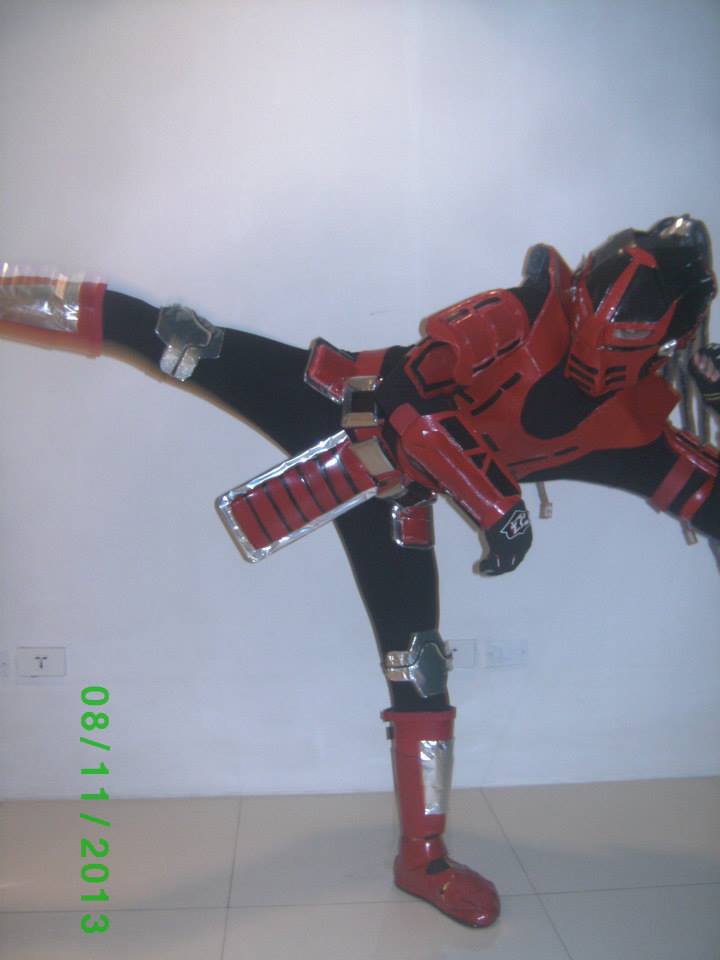
Samantha Joy Villafuerte, 18, of Himamaylan City/Riverside College cosplaying as Saber was crowned champion of the COS its all PLAY: The Second Encounter held by the SAS Inc. under Manager Ritchie Vargas last August 11, 2013 at the District North Point, Ayala Mall, Talisay City, Negros Occidental (Samantha Joy Villafuerte photo). Riven Villafuerte, 23, of Himamaylan City cosplaying as Zeus during the COS its all PLAY: The Second Encounter held by the SAS Inc. under Manager Ritchie Vargas last August 11, 2013 at the District North Point, Ayala Mall, Talisay City, Negros Occidental. Villafuertes has previously been crowned champion in another cosplay competition held by Cyberzone at the Event Center, SM City Bacolod, Reclamation Area, Bacolod City and is set to compete in Manila for a Cosplay Mania (James U. Sy Jr./NDB/SAS Inc. photo). Kent Agdana,23, of Sagay City cosplaying as Sektor during the COS its all PLAY: The Second Encounter held by the SAS Inc. under Manager Ritchie Vargas last August 11, 2013 at the District North Point, Ayala Mall, Talisay City, Negros Occidental (James U. Sy Jr./NDB/SAS Inc. photo). Christine Ibañez, 15, of Domingo Lacson National High School (DLNAHS) cosplaying as Cyclops during the COS its all PLAY: The Second Encounter held by the SAS Inc. under Manager Ritchie Vargas last August 11, 2013 at the District North Point, Ayala Mall, Talisay City, Negros Occidental (James U. Sy Jr./NDB/SAS Inc. photo). Christine Faith T. Aplaon, 19, of Riverside College cosplaying as Tenten during the COS its all PLAY: The Second Encounter held by the SAS Inc. under Manager Ritchie Vargas last August 11, 2013 at the District North Point, Ayala Mall, Talisay City, Negros Occidental (James U. Sy Jr./NDB/SAS Inc. photo). Louelle Tiamsing of CHMSC cosplaying as Black Rock Shooter during the COS its all PLAY: The Second Encounter held by the SAS Inc. under Manager Ritchie Vargas last August 11, 2013 at the District North Point, Ayala Mall, Talisay City, Negros Occidental (James U. Sy Jr./NDB/SAS Inc. photo). Negros Daily Bulletin (NDB) columnist/writer James U. Sy Jr. with little Spider-man during the COS its all PLAY: The Second Encounter, held by the SAS Inc. under Manager Ritchie Vargas last August 11, 2013 at the District North Point, Ayala Mall, Talisay City, Negros Occidental (James U. Sy Jr./NDB/SAS Inc. photo). Pretty COS trippers pose for the camera during the COS its all PLAY: The Second Encounter, held by the SAS Inc. under Manager Ritchie Vargas last August 11, 2013 at the District North Point, Ayala Mall, Talisay City, Negros Occidental (James U. Sy Jr./NDB/SAS Inc. photo). Cosplay grabbed the attention of Negrosanons again with the successful conduct of COS its all PLAY: The Second Encounter by SAS Inc. under Manager Ritchie Vargas last August 11, 2013 at the District North Point, Ayala Mall, Talisay City. Cosplay (kosupure in Nihonggo), a portmanteau of the English words costume and play, is an activity where participants wear costumes and accessories to represent a specific fictional character or idea. The term was coined by Takahashi, Nobuyuki of the Japanese studio Studio Hard while attending the 1984 World Science Fiction Convention (Worldcon) in Los Angeles. Over the years different cosplay competitions had been held, with the World Cosplay Summit being the most popular; the competition selects cosplayers from 20 countries to compete in the final round in Nagoya, Japan. Cosplay Mania, created and hosted by cosplay website and organization Cosplay.ph, is the biggest cosplay® event in the Philippines; it had its last event on September 29-30, 2012 at the SMX Convention Center Function Rooms 3-5, SM Mall of Asia Complex, Pasay City. Bacolod and Negros Occidental are catching up with the cosplay trending as at least four Bacolod cosplay group accounts are found in Facebook. SAS Inc. presented its inaugural event last August 28, 2012 at the Terra Dolce Mall, Corner Hilado Ext., 13th St., Bacolod City. The 1st Kabankalan City Cosplay Competition was held by the House of Rising Youth, Negros Cosplay Federation, and Cosplay on the Move last January 12, 2013 at the Kabankalan City Public Plaza. Eventual champion of the COS its all PLAY: The Second Encounter was Samantha Joy Villafuerte, 18, of Himamaylan City, a 3rd year Medical Technology student at Riverside College, who cosplayed as Saber. It was just her second competition and she entered it together with her brother, Riven Villafuerte, 23, who portrayed Zeus and who had previously won the Regional leg of the single category of the Cyberzone Grand Prix last year at SM City Bacolod. Competitors from Bacolod, Himamaylan, Sagay, and talisay joined the event. The other cosplayers who competed were Cherry Ann Alagaban (Yuna Braska), Christine Faith T. Aplaon (Tenten), Glennie Grace G. Arostique (Neapors of War - Fairy), Uzziah Ballesteros (The Flash), Bryan Boy Capunong (Archbishop), Marvin V. Donasco (Allen Walker), Christine Ibañez (Cyclops), Stephanie Ignacio (Amy Sorel), Jessalyn Sta. Rita, and Louelle Tiamsing (Black Rock Shoder). There were also several cos trippers who were present. Since a picture says a thousand words, here are a few to best describe the event.

Wednesday, August 14, 2013

Samantha Villafuerte, SAS Inc. COS its all PLAY II Champion by James U. Sy Jr.

CHAMPION. Samantha Joy Villafuerte, 18, of Himamaylan City/Riverside College cosplaying as Saber, with Negros Daily Bulletin (NDB) writer James U. Sy Jr. Villafuerte was crowned champion of the COS its all PLAY: The Second Encounter, held by the SAS Inc. under Manager Ritchie Vargas last August 11, 2013 at the District North Point, Ayala Mall, Talisay City, Negros Occidental (James U. Sy Jr./CMAS/NDB/SAS Inc. photo). Samantha Joy Villafuerte, 18, of Himamaylan City/ Order of the Cosplay Templars cosplaying as Saber, was crowned champion in COS its all PLAY: The Second Encounter held by SAS Inc. under Manager Ritchie Vargas last August 11, 2013 at the District North Point, Ayala Mall, Talisay City, Negros Occidental. Villafuerte, a 3rd year Medical Technology student at Riverside College, entered the competition along with his brother Riven Villafuerte, 23, who portrayed Zeus and who had previously won the Regional leg of the single category of the Cyberzone Grand Prix last year at SM City Bacolod. The Villafuerte siblings were among the 13 cosplayers who participated in the SAS Inc. competition. Villafuerte, in only her second cosplay competition, looked convincing in her costume complete with breastplate armor, cape, and longsword. The other cosplayers who graced the stage at the District North Point, Ayala Mall include Cherry Ann Alagaban of LHNHS/Najagihari Cosplay Guild (Yuna Braska), Christine Faith T. Aplaon, 19, of Riverside College (Tenten), Glennie Grace G. Arostique of USLS/Najagihari Cosplay Guild ( Neapors of War - Fairy), Uzziah Ballesteros of DCGHS cosplaying as The Flash), Bryan Boy Capunong of CASAP (Archbishop), Marvin V. Donasco of Sagay City (Allen Walker), Christine Ibañez, 15, of Domingo Lacson National High School (Cyclops), Stephanie Ignacio of DCGHS (Amy Sorel), Jessalyn Sta. Rita, and Louelle Tiamsing of CHMSC (Black Rock Shoder). SAS Inc. previously held the inaugural of the competition, COS It’s All PLAY: The First Encounter, last August 28, 2012 at the Terra Dolce Mall, Corner Hilado Ext., 13th St., Bacolod City where France Adrian T. Seban, cosplaying as Aang of The Last Airbender and and Steven Vivero, cosplaying as Sesshoumaru, were the grand prize winners in the youngsters and adults categories. Donasco was entered in the competition as Death the Kid.

Friday, August 9, 2013

Hilarious & Embarrassing Filipino Names by James U. Sy Jr.

NOTE: Names appearing herewith are all real life. One word entries refer to surnames, unless obviously referring to first and second names. Historically, the pre-Hispanic inhabitants of the Philippine Islands did not have surnames, as was the case for different cultures in Europe at a certain point in time. This is why we encounter names such as Lapu-Lapu, Humabon, and Sumakwel in Philippine history classes. If two people had the same name within a barangay they were differentiated as, “(name), anak ni (name),” a similar representation exhibited in the suffix -son (i.e. “son of,” such as Johnson) in British surnames and the prefixes Mac, or later Mc, (i.e. “son of,” such as MacCormack), O' (i.e. “grandson of/descended from,” such as O'Connor), and Fitz (i.e. “son of”) in Irish surnames. Governor-General Narciso Z. Claveria issued the Renovacion del Apellido decree on November 21, 1849, which ordered the “Indios” to adopt a surname based on a list compiled by Spanish officials, the Catalogo Alfabetico de Apellidos “Alphabetical Catalogue of Surnames.” During the Spanish Era, just before the decree, some Filipinos had adopted surnames; they’re either indigenous, such as Macapagal (hi, GMA!), or the names of saints or other Catholic symbols, such as de la Cruz and San Jose. Interestingly, members of the same family did not use the same surnames. What’s more, some Filipinos changed names from time to time. This made it a living hell for the Spaniards when collecting taxes so the decree mandated that a family will have only one surname, to make taxation monitoring easy. The decree also forbade the use of religious surnames but obviously this was not strictly enforced. The Catalogo was actually a mixture of Spanish surnames (and terms from the vegetable and mineral kingdoms, geography, arts, etc.) and a sprinkling of native names and terms. The implementation of the decree was not standardized so in some islands and provinces, such as Panay, the alphabetical pages of the Catalogo were sent to individual towns, resulting to almost everyone in a particular town to have surnames beginning with the same letter. Even to this day, one can deduce, with roughly a 50-50 rate of accuracy, the roots of a person in Panay given the first letter of his surname, obviously given the exception of women who went on to marry and change their surnames. Diamante and Tortal, for instance, would have come from Dumangas and Tigbauan respectively. Majority of the inhabitants of Negros Occidental trace their ancestry to migrants from Panay and may be surprised to discover this to be true when they search for their original place of origin. So what does this history lesson got to do with hilarious and embarrassing Filipino names? One word: genesis. We will find in the Catalogo some of the earliest funny and derogatory Filipino surnames to be put on record (if I deduced it right). Among those found in the Catalogo were Agta, Baboy, Baboyan, Bogoc, Botbot, Buaya, Cahoboan, Halimaw, Kabaong, Libang, Malibangco, Otot, Tubul, Ungo, and Ung-goy. These examples would definitely elicit a chuckle to Cebuanos, Ilonggos, and Tagalogs to varying degrees. Unfortunately, it doesn’t stop there. We still find awkward names in our time, many of which have a sexual ring, making their bearers more than just embarrassed. Among the more notable surnames are Bate, Bayag (Laoag), Bayag-na (Bukidnon), Binayag, Galolo (Cebu). Labasan, Labatiti (Bauan, Batangas), Lakipuke, Macabaleg-oten, Pecpec (Ilocos Norte), Puque, P**ayne, T*rug*, and Utitco. Pecpec was the old Ilocano word for “full,” as in a basket brimming with fruit; it was the shift in the word’s meaning that give the surname its notoriety. Some surnames may look innocent enough but when combined with the first names they open the gates to endless taunting from people around the bearer. Such were the case for Bulbulito Bayagbag, Lulu Ang and Malou Ang, Gina Jaculo, Anabelle Lat, and Lucky T. Tinio. The list can be extended further with the following: Bagonggahasa (Paete, Laguna), Dimagahasa (Boac), Dimalanta, Dimapasoc, Dimaregla, Norma Hinalay, Lanta, Loshang, Dina Macuja, Lolita Magtanan, Agnes Masikip, Panti, Pokpok, Ray Pinoco, and Sariwa. It should be noted here that Bagonggahasa refers “to something newly sharpened,” with the root word being hasa “sharpen,” but often misread as gahasa “rape.” But inspite of this semantic explanation, Ligaya Bagonggahasa and Virginia Bagonggahasa do not fail to elicit smiles. Some may be grossed out with names having a smell such as Anne Bajo, Bakekang, Inodoro Casillas Jr., Dina Lego, Libag, Annabelle Otot, and May Regla. Still other Filipino names can embarrass in a different way: Jose Bangag, Lani Bayot, Mario Bayot, Bogtae (Bacolod City), Richie Bab Boyboy, Calvo, Galit, Kulubot, Maitim, Nasilawan, Oliver Orongsolong, Pagsisihan, Ely Pante, Pinadamutan, Sipsip, Tagapulot, Talong, Tanga, and Ubaldo Punongbayan. Things have changed through the years though, even the names themselves. Eustaquio for example named his son Eustaquio Jr. , who in turn named his own son, Stacy. Patricio Bucog went to the USA and when he returned to the Philippines he was already Pat Bone. Hilarious names are a great challenge to the children who own them. Classmates are fast to tease, call names, and the like. Consider Rommel Kennedy Polotan. Every time their teacher called out “Polotan” during a roll call his classmates would always shout “Beer! Beer!” Or in the case of Miss America, Miss Africa, and Miss Austria, all classmates in the same class, where during roll calls, their classmates would clap their hands and after their names had been called out in succession, the whole class would sing We Are the World. Some other Filipino names ring a “memory recall” bell, but minus the embarrassment that goes with the other previously discussed names. Consider these: Mary Christmas Aguinaldo, Benny Bilang, Cagandahan, Caguapuhan, Christmas Joy (born on Christmas day), Halloweena Coffin (Filipina born on All Saints Day in the Philippines and married to an American), Happy Joy Joy De La Cruz, Sanctus Espiritu, De Mayo Flores, Chica Go, Philip P. Ines, Sixto Pepito Jualo, Kim Arthur, Rich Pobre, Honeygirl Pulot-Pukyutan, Halina Tayo, and Spaghetti 88. Filipino celebrities have their own place in the country’s harvest of hilarious names, mostly because Filipino comedians chose screen names that sound funny. Babalo, Palito, Pokwang, and Pooh are just some that come to mind. Those old enough during the Bomba era of the Marcos regime would remember stars such as Coca Nicolas, Pepsi Paloma, and Sarsi Emmanuelle, all adopting names of popular brand of softdrink in the 1970’s/1980’s, perhaps to quench the thirst of their fans. Papa Lito is a DJ at Campus Radio in Bacolod City. Samson Samson, a gay, joined the Pilipinas Got Talent Season 4 auditions and adopted the screen name Delilah, as a member of the Fiesta Broadway on March 3, 2013. Actor Cesar Montano is Cesar Manhilot in real life. Actress Lovely Rivero’s real name is Ginebra Miguela Macalinao. Cheers to everyone who got that clear. Of course, Filipino celebrity-inspired names are now the in-thing: Jean Claude Andam, Genghis Chan, Jackie Chan (once went to University of St. La Salle), Magic Chiongson, Edgar Allan Pe (ADMU alumni), Edgar Allan Pomar (Bacolod City, Negros Occidental), Fernando Pon Jr., and Jonathan Livingston Sy (ADMU alumni). So what does this review of hilarious and embarrassing Filipino names teach us? The would-be parents should have the prudence and common sense to choose a name that will not bring ridicule to their child, a name that they could live up to and not one that they will hate for the rest of their lives. Sensible parenthood also means not punishing kids with kilometric names, otherwise he/she would have just finished writing his/her name and the class is already handing in their test papers. I’m just lucky to have a short name that is not funny or hilarious.